
NATO Drills Counter Drone Power In Baltics
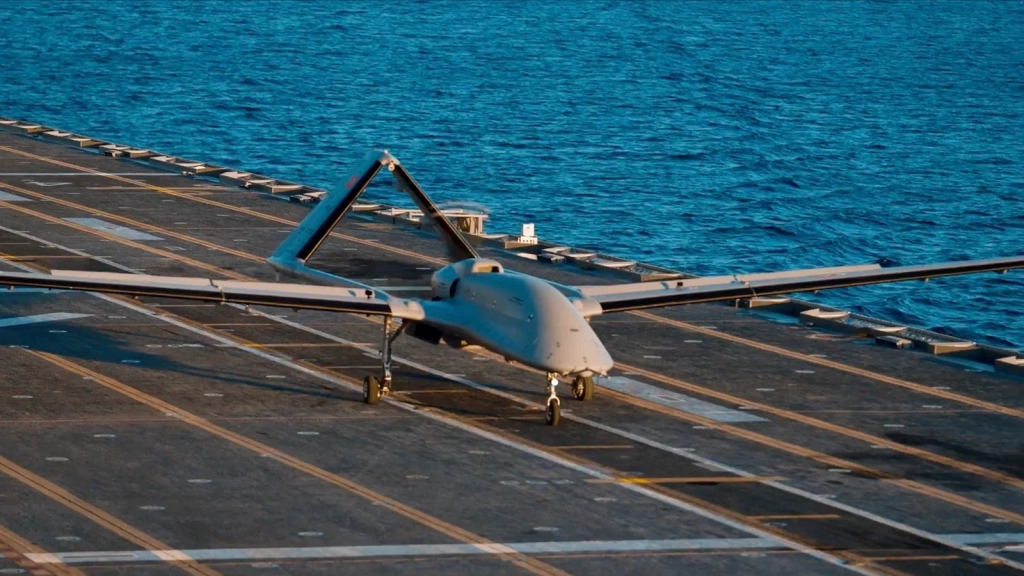 Historic First: Bayraktar TB3 Drone Successfully Operates from TCG Anadolu Ship
Check out the Best Deals on Amazon for DJI Drones today!
On February 20, 2026, the sky over the Baltics turned into a rehearsal stage for modern air defense. From NATO Allied Air Command headquarters in Ramstein, Allied forces launched a counter drone training mission designed to sharpen deterrence along NATO’s eastern flank, as they reported on a Press Release.
This was not just another patrol. It was a Flexible Deterrent Option mission, a scalable show of readiness meant to send a clear message without firing a shot. The drill supported NATO’s enhanced Vigilance Activity Eastern Sentry and the major exercise Steadfast Dart 26 under Joint Force Command Brunssum.
In simple terms, NATO practiced hunting drones before drones become a problem.
Fighters vs Drone in Live C-UAS Drill
The training brought together a mixed Allied air package. German and Italian Eurofighters flew alongside Spanish F-18s. A Spanish A400M tanker kept them fueled and flexible.
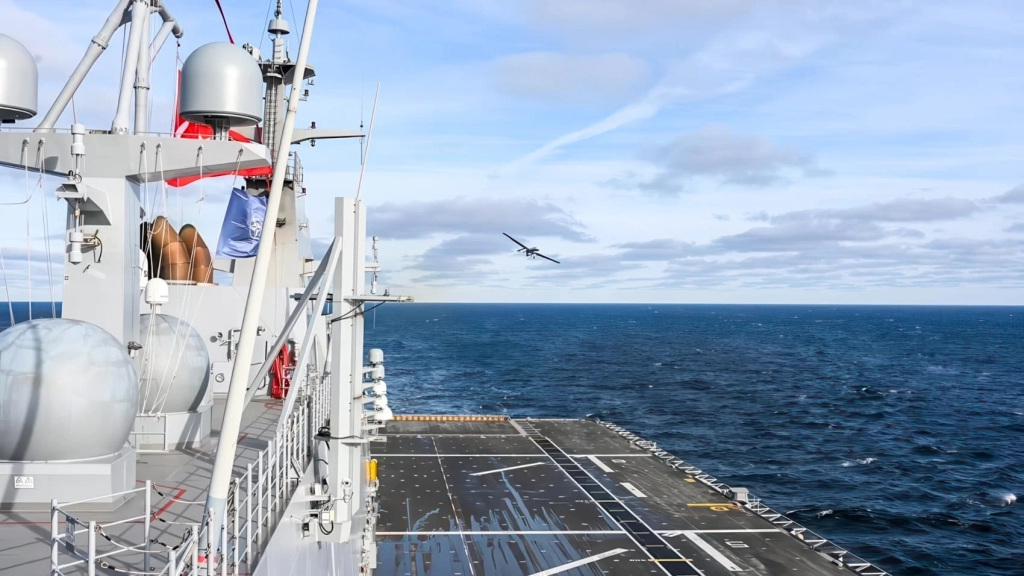 Photo credit: Turkish Ministry of National Defence
At the center of the scenario was a Baykar Bayraktar TB3, a Turkish unmanned aerial vehicle used to simulate a real world drone threat. Instead of destroying it, the focus was on tactics, coordination, and response timing. This was about refining counter unmanned aircraft system procedures, not scoring a kill.
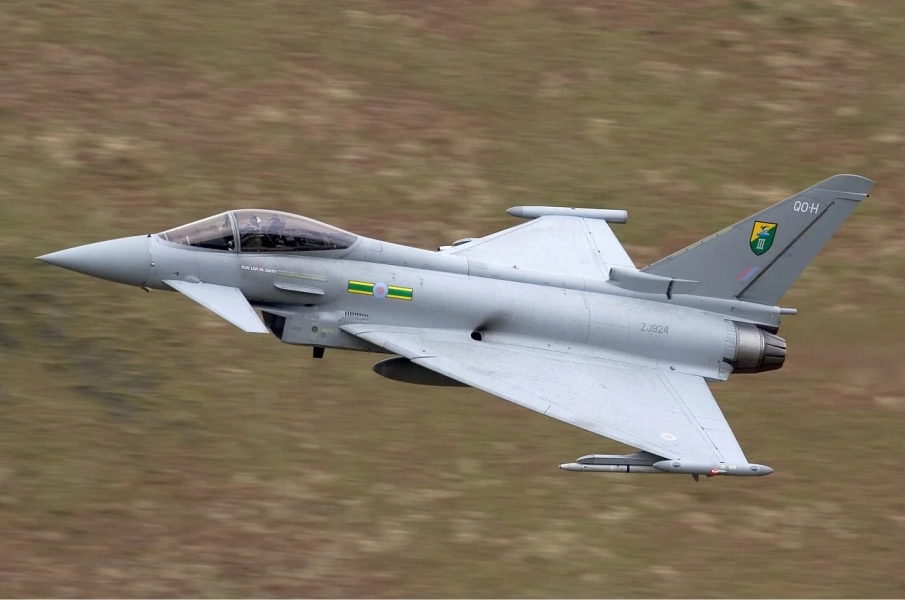 Photo credit: Chris Lofting / Wikimedia
Overhead, NATO Airborne Warning & Control System aircraft provided airborne command and control, knitting together fighters, tanker, and drone into one coordinated picture.
On the ground, NATO’s Combined Air Operations Centre in Uedem managed the operation, ensuring command and control integration stayed tight.
Counter drone training is no longer niche. It is becoming central to NATO’s Integrated Air and Missile Defence framework. Small drones are cheap, flexible, and increasingly capable. That changes the math of air defense.
Why the Eastern Flank Focus Matters
The Baltics are not random training airspace. They sit on NATO’s eastern edge, where deterrence must be visible, credible, and constant.
Flexible Deterrent Options give NATO decision makers tools in the early stages of a developing crisis. They allow a rapid show of capability without escalating to full scale operations. Think of it as a pressure valve that can be adjusted in real time.
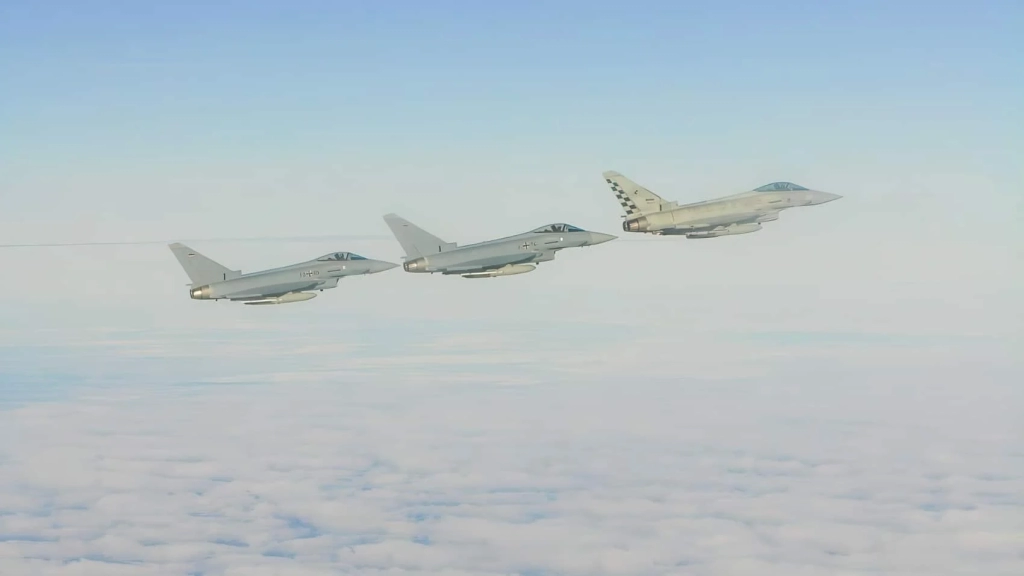 Photo credit: Italian Air Force.
By integrating fighters, support aircraft, and an unmanned platform into a single defensive scenario, the Alliance demonstrated multi domain coordination across distance and time. That interoperability is the real weapon. Hardware matters, but synchronized decision cycles matter more.
Regular C-UAS training under Eastern Sentry ensures that if a real drone crosses into NATO airspace, the response will not be improvised.
DroneXL’s Take
NATO’s latest Baltic drill underscores a reality drone professionals already understand. The drone conversation is no longer just about commercial photography or battlefield strikes. It is about airspace control.
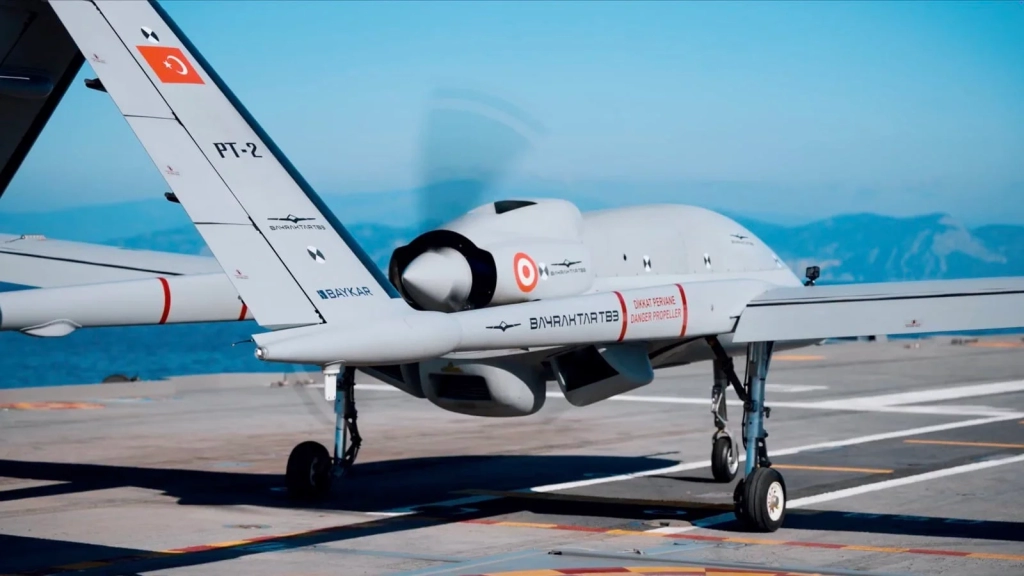 Photo credit: Turkish Ministry of National Defence
Using a Bayraktar TB3 as part of the scenario signals something important. NATO is not only preparing for legacy aircraft threats. It is training against modern unmanned systems that reflect real world proliferation.
For readers tracking the evolution of air defense, this mission highlights where the next friction point lies. Cheap drones versus layered air defense networks. Agility versus integration.
The skies over Europe are becoming a laboratory for that equation. And NATO clearly intends to keep its edge sharp.
Photo credit: Turkish Ministry of National Defence, Italian Air Force, Wikimedia.