
Inside Ukraine’s Drone Unit Redefining Naval Warfare
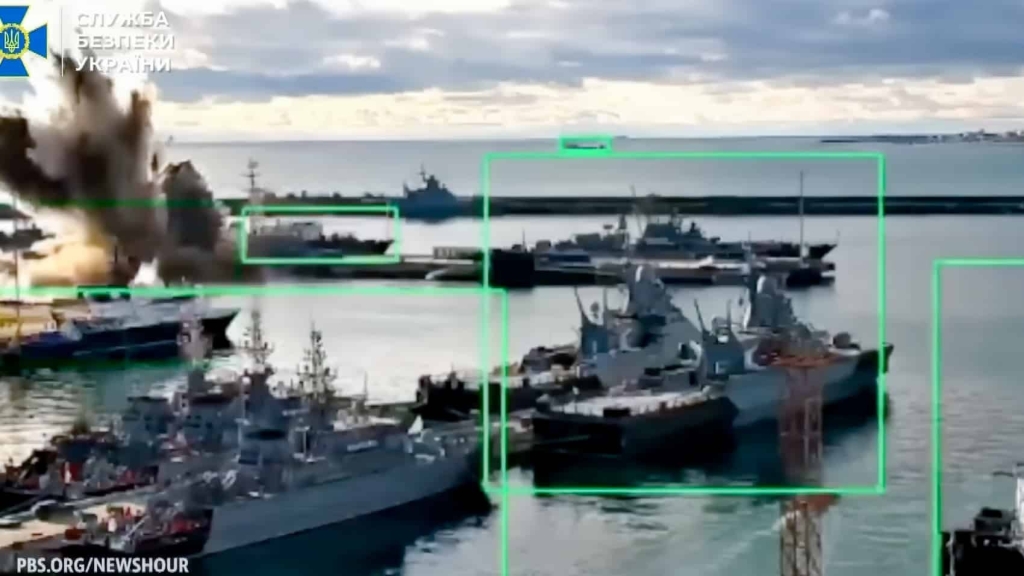 Photo credit: PBS News
Amazon Drone Deals: DJI Mini 5 Pro Fly More Combo with DJI RC2 now for $1,099!
Ukraine did not defeat Russia’s Black Sea fleet with destroyers or submarines, it did it with remote controls, fiber optics, and engineers who learned faster than their enemy expected. When Russia annexed Crimea in 2014, Ukraine effectively lost its navy, and when the full scale invasion began in 2022, the imbalance at sea looked permanent. Instead, Ukraine quietly rewrote the rules, as PBS News reports.
Naval drones like the Magura 5 and Magura 7 are not just improvised weapons, they are strategic tools that forced Russia’s most valuable ships out of Crimea and deep into Novorossiysk. That shift alone changed the security of the western Black Sea, reopened shipping lanes, and protected Ukraine’s grain exports without firing a single traditional naval broadside.
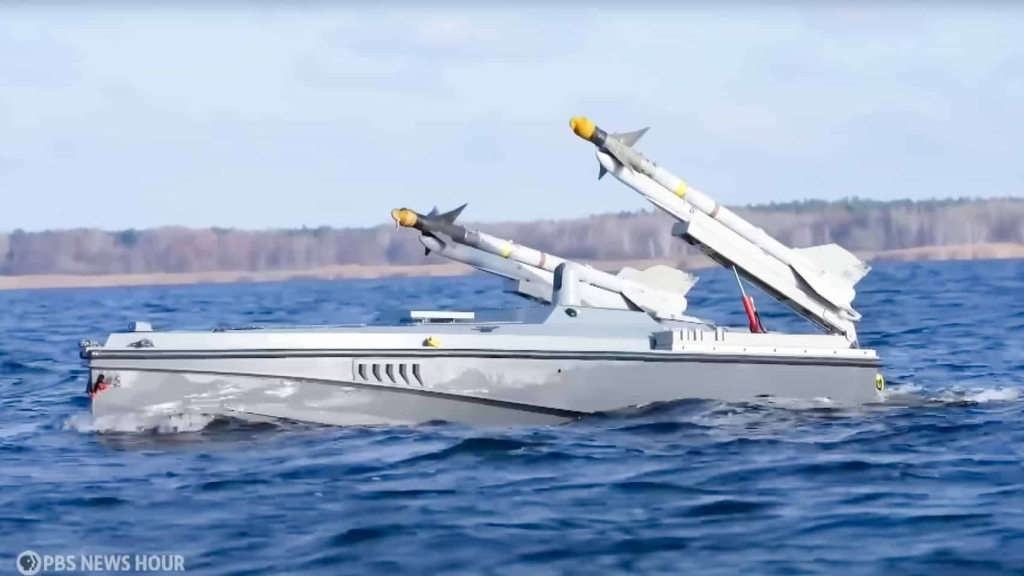 Photo credit: PBS News
What stands out is not only the effectiveness, but the asymmetry. A relatively cheap unmanned boat can cripple or destroy a warship worth tens of millions of dollars, and it can do so while operating in coordinated groups, using commercial traffic as cover, and exploiting the limitations of legacy naval defenses.
This is not luck or novelty, it is a deliberate doctrine built around speed, cost efficiency, and adaptability.
Cheap drones, expensive consequences
The strike on the patrol ship Sergey Kotov is a perfect example of how modern drone warfare flips cost equations upside down.
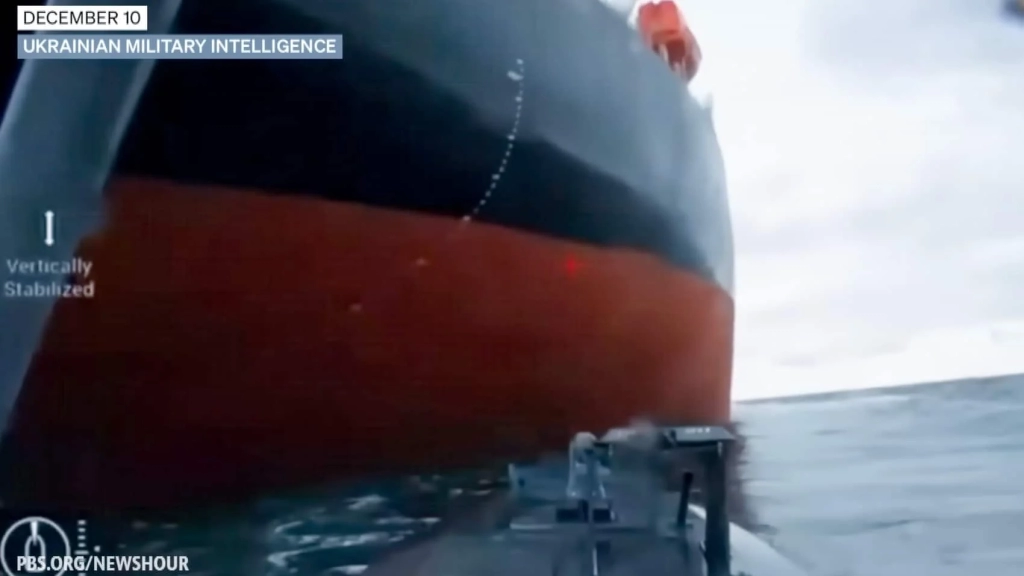 Photo credit: PBS News
Ukraine did not need air superiority or a carrier group, it needed reliable navigation, explosive payloads, and operators who understood how to hunt rather than confront. Working in swarms, Ukrainian naval drones tracked, pressured, and ultimately destroyed a ship valued at roughly sixty five million dollars.
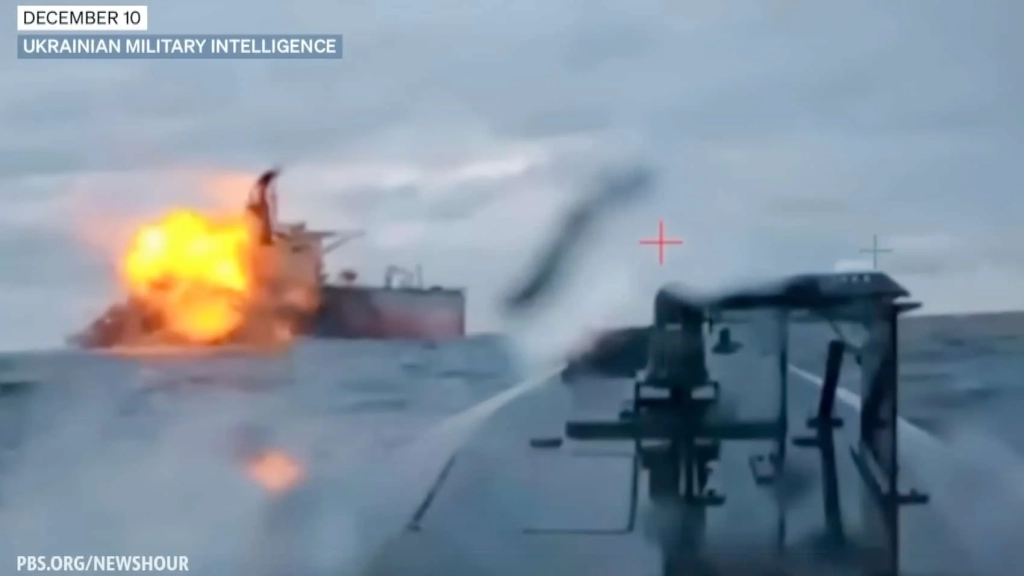 Photo credit: PBS News
Even more telling is how these same platforms have been adapted to target helicopters and now Russia’s so called shadow fleet, oil tankers that quietly bankroll the war by bypassing sanctions.
These strikes move beyond battlefield tactics and into economic pressure, forcing Russia to defend assets it never expected to be vulnerable.
On land and in the air, Ukraine has applied the same logic. Long range kamikaze drones like the Beaver are reaching six hundred miles or more, striking fuel depots, logistics hubs, and refineries that keep Russia’s war machine running.
At one point, more than ten percent of Russia’s refining capacity was temporarily knocked offline, not by cruise missiles, but by unmanned aircraft assembled in modest hangars.
The drone race is accelerating, and the sea still favors Ukraine
Russia is not standing still. Its drone production numbers are staggering, with hundreds reportedly built each day, and its nightly barrages against Ukrainian infrastructure show how deeply unmanned systems are now embedded in modern warfare. In sheer volume, Russia currently outpaces Ukraine.
Yet at sea, the balance still favors Kyiv. Naval drones remain one of the few areas where Ukraine maintains a clear offensive edge, forcing Russian vessels to operate farther from contested waters and spend more time defending than projecting power. That is a remarkable outcome for a country that technically does not have a navy in the traditional sense.
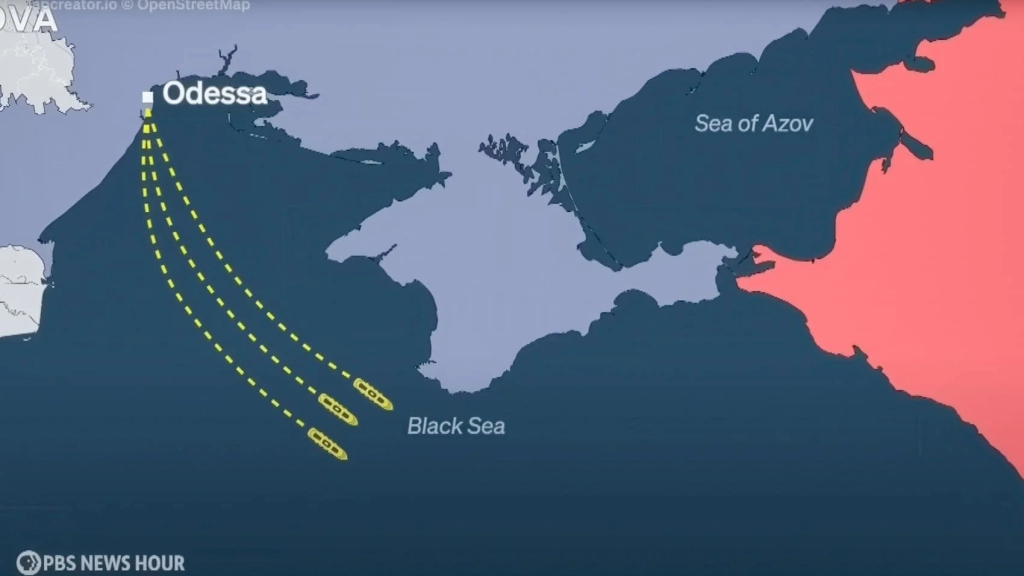 Photo credit: PBS News
This conflict is no longer just about territory. It is about who learns faster, who adapts cheaper, and who accepts that unmanned systems are not support tools, but primary weapons. The commanders behind these operations speak less like traditional officers and more like engineers and hunters, focused on logistics, timing, and opportunity rather than symbolism.
DroneXL’s Take
What Ukraine has built is not just a drone unit, it is a blueprint for the future of warfare. Naval drones, long range strike UAVs, and swarm tactics are proving that dominance no longer belongs exclusively to the side with the biggest fleet or the deepest pockets.
For anyone watching from the civilian drone world, this is a sobering reminder that the technologies we discuss in terms of range, payload, autonomy, and reliability are no longer abstract specs. They are reshaping geopolitics in real time, and the lessons learned in the Black Sea today will echo through military doctrines around the world for decades.