
How One Company Cracked The Code To A Hydrogen-Powered Drone
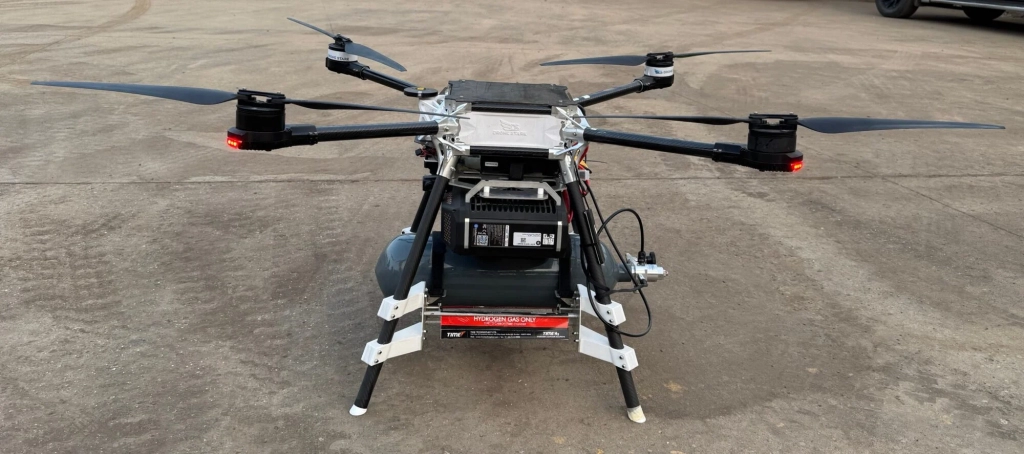 Time Technoplast’s Hydrogen-Powered Drone Completes First Test Trials | Photo Credit: Time Technoplast Ltd
Amazon Drone Deals: DJI Mini 5 Pro Fly More Combo with DJI RC2 now for $1,099!
Time Technoplast (Time) is an Indian manufacturing company that just announced its first successful testing of a hydrogen-powered drone that uses their own proprietary hydrogen cylinder and fuel systems.
In a December 22nd filing, Time says it successfully developed and flight-tested a hydrogen-powered drone with a “Type III fully wrapped composite hydrogen cylinder” fuel system. This company isn’t focusing on the drone or the payload, their focus is on the hydrogen cylinders themselves, and applying those to other UAS as well.
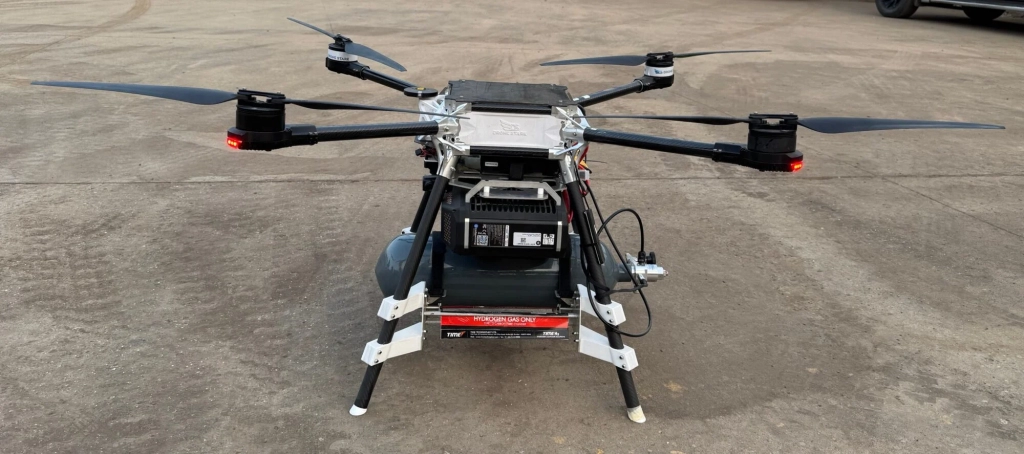 Time Technoplast’s Hydrogen-Powered Drone Completes First Test Trials | Photo Credit: Time Technoplast Ltd
What Was Actually Tested?
According to the company’s disclosure, the hydrogen-powered drone is built around two core components:
- A Type-III fully wrapped composite hydrogen cylinder
- A hydrogen fuel cell power system
The filing does not publish exact endurance numbers or a specific payload rating, which are the key details everyone cares about. What it does claim is that the system completed initial performance trials and validation tests, meeting their targeted endurance, payload, and operational parameters.
The wording matters. It confirms “a trial happened,” but it is still not the same thing as a published spec sheet.
The Fuel Cylinder is Only Half of the Story
Time has been signaling this move for over a year. In a November 2024 press release, the company announced approval from India’s Petroleum and Explosives Safety Organization (PESO) to manufacture and supply high-pressure composite hydrogen cylinders. They explicitly call out hydrogen fuel cell drones and UAV applications in that same release.
That older release also drops one of the only concrete details available so far: a 6.8-liter Type III cylinder, with more sizes supposedly under development.
A hydrogen-powered drone lives or dies based on fuel storage. If Time can build a repeatable, government-approved cylinder design that manufacturers can integrate without pricing it into the stratosphere, they do not need to “win” with a single drone.
At the end of the day, Time is still a manufacturing entity, and their priorities will lie in manufacturing, not necessarily drones.
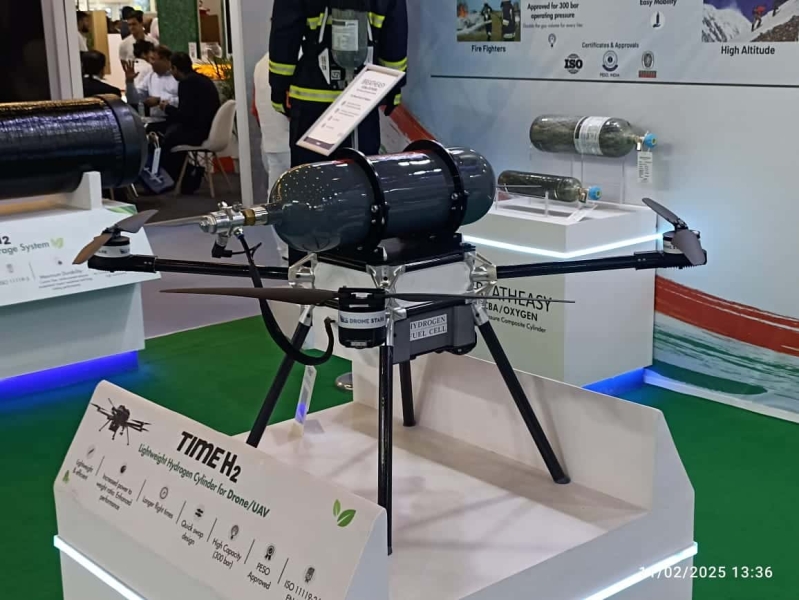 Time Technoplast’s Time H2 Hydrogen Cylinder Drone | Photo Credits: Time Technoplast Ltd
A Quick “Type III” Explanation
According to the International Organization for Standardization (ISO), A Type III cylinder is a load-sharing metal liner (usually aluminum) with a full composite wrapping. That definition shows up in ISO’s composite cylinder standard language and in U.S. DOE hydrogen storage references.
Where Drone Stark Fits In
Time Technoplast is not doing this alone, because Time is not a drone manufacturer.
In an August 7, 2025 disclosure, Time says it signed an agreement with Drone Stark Technologies (OPC) Private Limited (in Mumbai) to develop hydrogen-powered drones using composite hydrogen cylinders and fuel cell technology. The contract is good for three years, but if we see the Indian government become invested, I’d bet on that contract being extended in the near future.
This partnership is a clean split of responsibilities:
- Drone Stark brings airframe and integration experience
- Time brings the fuel container, manufacturing, and composite knowledge
Fuel Alternatives, and Why Hydrogen?
It would be great to see more alternative energy options start popping up for unmanned operations. Lithium batteries are great, but they are volatile, and they don’t have . The FAA has been very direct that lithium-ion batteries are capable of overheating and entering thermal runaway, sometimes without warning.
DroneXL’s Take
Time is talking a big talk, but at the end of the day, there still is not much concrete photographic or video evidence that shows these operations taking place. No formal flight time has been announced. And while it is great that they figured out the cylinder, that is only half of the battle, arguably less if you consider all the years of R&D that went into getting quadcopters to where they are today.
If Time can show real, repeatable endurance improvements, this could be the kind of tech that actually opens up a new wave of next-generation drones.
Before I get truly excited about the wide-scale availability, I want to see Time Technoplast release a full spec sheet of the drone, an in-depth video, and let people see “under the hood”.