
Honeywell and Odys Aviation Unveil New Airborne Layer for Counter-UAS Defense Solutions
New System Highlights the Need for Layered Protection Against Evolving Drone Threats
As drone threats continue to evolve, defense strategies are shifting toward layered systems that combine multiple technologies. A new collaboration between Honeywell Aerospace and Odys Aviation reflects this trend.
The companies have announced a joint effort to develop an airborne counter-unmanned aerial system (C-UAS) designed to protect critical infrastructure and strategic assets. This initiative underscores a key trend in the industry: no single system can address every drone threat. Instead, operators are building layered defenses that detect, track, and respond across multiple domains.
Adding a New Layer to Defense Architecture
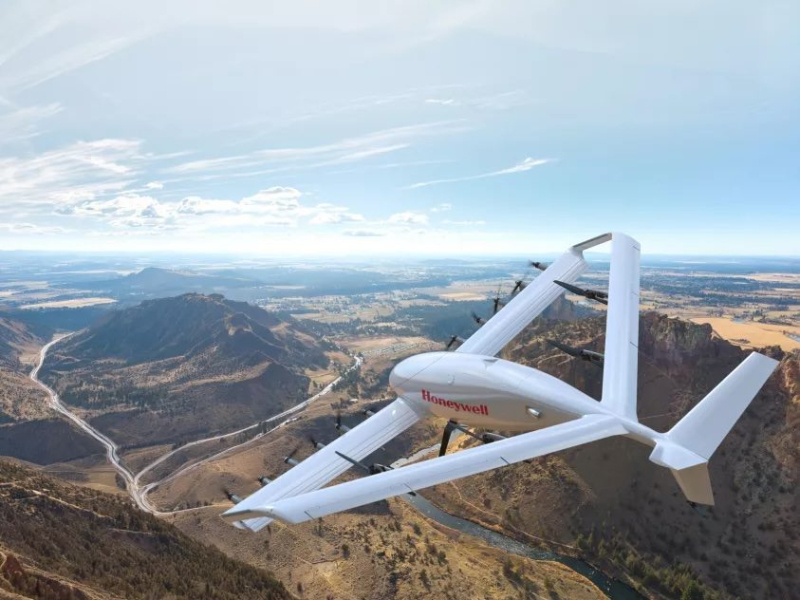
The new system combines Honeywell’s Stationary and Mobile UAS Reveal and Intercept (SAMURAI) platform with Odys Aviation’s long-range Laila UAV. This collaboration introduces an airborne layer that operates between ground-based sensors and high-end missile defense systems.
This approach enhances coverage and reduces reliance on costly kinetic responses, allowing for earlier detection and engagement of threats over wide areas.
In a layered model, each component plays a defined role:
- Ground sensors provide initial detection.
- Airborne systems extend range and persistence.
- Higher-end defenses are reserved for last-resort engagement.
This structure helps operators manage both cost and risk while improving resilience against complex or coordinated drone activity.
Why Layered Defense Matters
Drone threats have transformed the scale and economics of air defense. Small, low-cost systems can challenge traditional approaches that rely on expensive interceptors.
“Drone threats have fundamentally changed the economics and operational requirements of air defense,” said James Dorris, CEO of Odys Aviation. “Critical infrastructure and forward-operating locations require persistent protection across large areas and the ability to engage threats at the horizon long before they’re at the doorstep.”
A layered system addresses these challenges by allowing earlier intervention and reducing the need for high-cost responses. It also enables continuous monitoring in areas where fixed infrastructure may be limited, which is particularly important for distributed assets such as pipelines, refineries, and offshore platforms.
Airborne Persistence Expands Coverage
The Laila UAV offers long endurance and flexible deployment capabilities. Its hybrid propulsion allows it to remain airborne for up to eight hours and cover a range of 450 miles without requiring dedicated charging infrastructure. It can operate using commonly available fuels, supporting deployment in remote or expeditionary environments.
By maintaining a persistent presence, the airborne layer can continuously monitor large areas and detect threats earlier than ground systems alone, filling a critical gap in layered defense.
Modular Design Supports Integration
The SAMURAI system features a modular design built with model-based systems engineering, allowing operators to integrate various sensors and effectors based on mission needs. The platform adheres to Modular Open Systems Approach standards, promoting interoperability and long-term sustainment while enabling systems to evolve as threats change.
Flexibility is essential in a layered defense strategy, as operators must quickly adapt to new types of drones and tactics. Modular systems ensure that each layer can be updated without the need to replace the entire architecture.
A Shift Toward Integrated Defense
The collaboration between Honeywell and Odys Aviation reflects a broader shift in how organizations approach drone defense. Rather than relying on a single solution, operators are developing integrated systems that combine detection, tracking, and response across multiple layers, with airborne platforms playing a crucial role.
As drone threats continue to expand, layered defense is becoming increasingly essential for effective protection.