
 Ambarella Photos and Snapshots of/from devices with their SoCs | Photo Credits: Ambarella
Amazon Drone Deals: DJI Mini 5 Pro with RC-N3 Controller now for $759!
Ambarella is one of those names that stays invisible until a company wants to brag about what’s under the hood of their new product. Based in Santa Clara, California, Ambarella builds the AI “brains” that handle heavy video processing and onboard calculations for cameras, instruments, robots, and yes, drones.
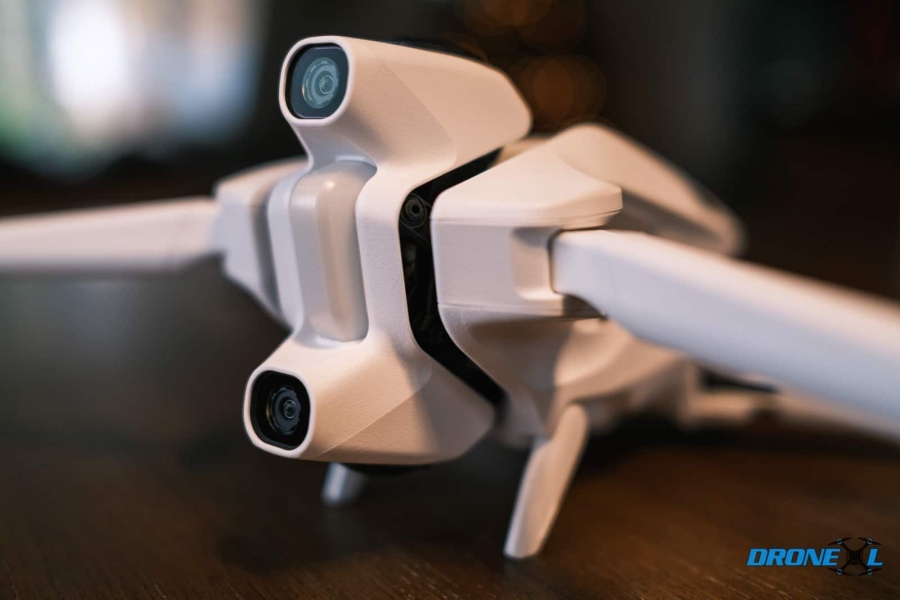 Ambarella’s SoC Powers the Antigravity A1’s Graphical Computations
The company announced that its CV5 AI vision system-on-chip (SOC) is inside of the Antigravity A1, the new 8K 360 drone that is trying to carve out its own “fly first, frame later” category.
And yes, this is happening at the same time the U.S. regulatory environment is getting more complicated for foreign-made drones and “critical components,” which makes the supply chain side of this story impossible to ignore.
Who Ambarella Is, and Why We Should Care
Ambarella does not build drones. They build the part that decides whether a drone can handle creating large video files, do it efficiently, and stack AI features on top without cooking the battery.
When Ambarella says “CV5,” they are talking about a high-end vision chip that was designed for 8K video pipelines and on-device AI workloads. They originally introduced CV5 as a 5 nm part capable of recording 8K video (or multiple 4K streams), with power efficiency as the headline. Ambarella has repeatedly claimed under-2W power for 8K/30 recording as a benchmark.
In 2016, Ambarella was working alongside the likes of DJI, GoPro, and Google. Around the start of 2018, they were dropped from all three companies, and forced to go back to the drawing board. The sudden success with the highly-discussed Antigravity A1 has propelled Ambarella back into the limelight of the drone world, and I’m excited to see what they’re working on next.
Why Antigravity’s A1 is the Perfect “Chip Showcase” Drone
A normal camera drone is already busy: one camera feed, one direction, one gimbal pipeline.
A 360 drone means more data, more processing, more encoding pressure, and more chances for problems if the system is not solid.
The A1 is being marketed as the world’s first all-in-one 8K 360 drone, and reviewers have been consistent about one thing across the board: the drone is great at capturing a lot of footage simultaneously, but the quality could be better for the price.
Specs and Pricing: What Stands Out
Antigravity’s available packages start at a huge price point:
- The Standard Bundle starts at $1,599.
- Explorer and Infinity bundles go higher, with extra batteries and accessories.
Now for the part that surprised me, and apparently surprised a lot of people:
Antigravity lists the A1 Flight Battery at $99.99, with a stated 2360mAh capacity and “up to 24 minutes” (with a long list of conditions). In a world where battery pricing has gotten insane, $100 packs feel almost nostalgic.
 Ambarella Photos and Snapshots of/from devices with their SoCs | Photo Credits: Ambarella
The Bigger Picture, and Why We Should Keep an Eye on Insta360
Ambarella is a domestic chip designer, but Antigravity falls under Insta360. Insta360 is a Chinese company, and if the US government has showed us anything recently, its that they won’t hesitate to throw more Chinese entities on their “Covered List” as they see fit.
DroneXL’s Take
Truth be told, I am a bit skeptical of the Antigravity A1 units with Ambarella’s chips inside, but that’s not Ambarella’s fault. I understand the ability to go back in post is great and all, but the flying experience looks downright boring. I know it is not meant to be as immersive as high-speed FPV racing or mountain diving, but this feels like a floating security camera more than anything.
Now, the part I will give them. The “Sky Path” style idea where the drone follows an autonomous route and spectators can put on the headset and feel like they are flying, that is genius. TechRadar basically describes the same use case: waypoints plus goggles equals a non-pilot getting the experience without actually flying the aircraft.
That is the part I would love to steal for the classroom. A GPS module and a tiny Li-ion whoop style build could turn into a safe “ride along” demo where students and visitors get the feeling of flight without the risk of someone panic-throttling into a wall. The concept is solid. It is the rest of the package and the price that makes me raise an eyebrow.
I am looking forward to the follow-up to the A1, and considering Ambarella’s chips inside of the A1 were released in 2021, I am hoping to see a new release in time for the A2 to hit the market.
If you’ve got any suggestions for how Ambarella or Antigravity could change their model moving forward, let me know below!