
Designing the Optimal Drone: How HP Additive Manufacturing Enables Speed, Scale, and Supply-Chain Flexibility
The drone industry is under pressure from multiple directions at once. Manufacturers are expected to move faster, iterate more often, scale production without overcommitting capital, and build supply chains that are easily identifiable, secure, and resilient. Increasingly, those pressures are forcing a rethink of how drones are designed and manufactured, not just how they fly.
That challenge is exactly what the Barcelona-based drone team at HP Additive Manufacturing set out to explore with their latest project. The team developed a complete aircraft to explore what becomes possible when aerospace engineering and additive manufacturing are designed together from the outset.
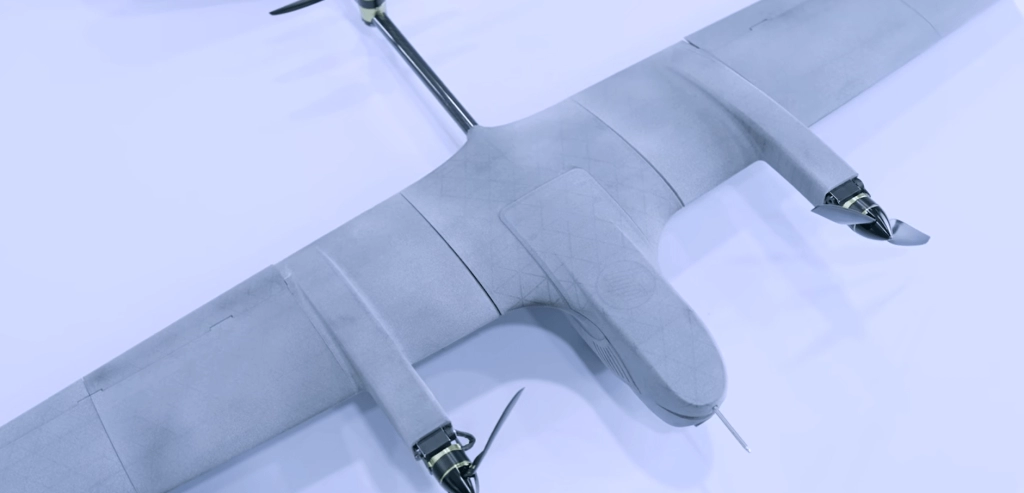
“We developed this drone to demonstrate how far you can get with the technology,” said Clara Quinquilla, Drone Segment Manager at HP. “It was about combining drone know-how with deep additive manufacturing expertise and seeing how much performance and flexibility we could unlock.”
Designing With the Manufacturing Process in Mind
From the beginning, the project brought together design engineers and aeronautical engineers working side by side, with additive manufacturing treated as a core design capability rather than a downstream production step.
The result is a 1.5-meter fixed-wing UAV designed specifically around what HP’s additive manufacturing platforms can do in production. By understanding both aerodynamics and the printing process in detail, the team was able to fine-tune designs quickly and efficiently.
“The design journey has been amazing,” Quinquilla said. “There were three different iterations within three months. That’s something that would normally take manufacturers much more time, and much more money.”
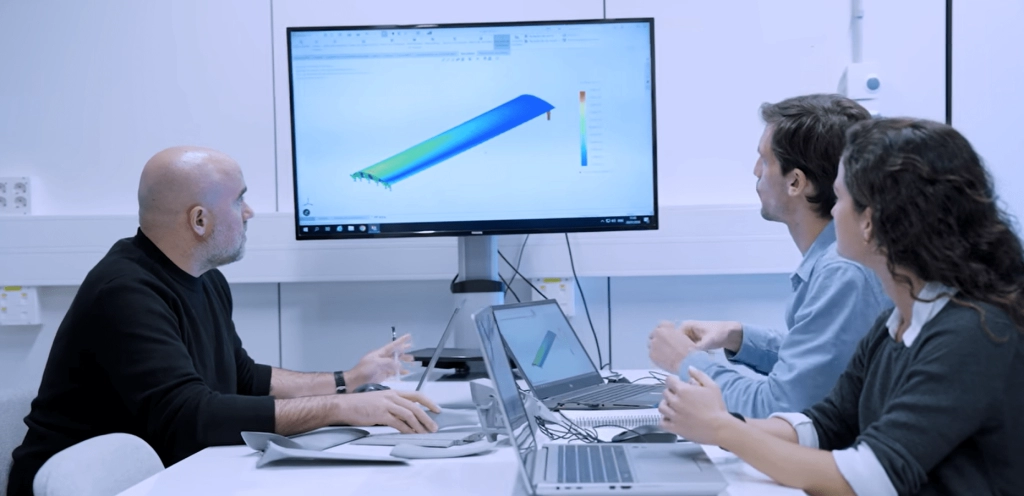
That pace was fueled by the team’s enthusiasm as much as the technology itself. Engineers worked late nights, tested aggressively, and adjusted designs in short cycles, pushing the limits of the process while learning from every flight.
Taking the Best from Every Manufacturing Technology
A key takeaway from the project is that no single manufacturing method is ideal for every part of a drone. Instead, HP’s team focused on combining technologies, each used where it delivers the most value.
The drone uses off-the-shelf carbon fiber rods as an internal skeleton, providing strength and stiffness at low cost. The exterior airframe is produced using HP’s additive manufacturing technology.
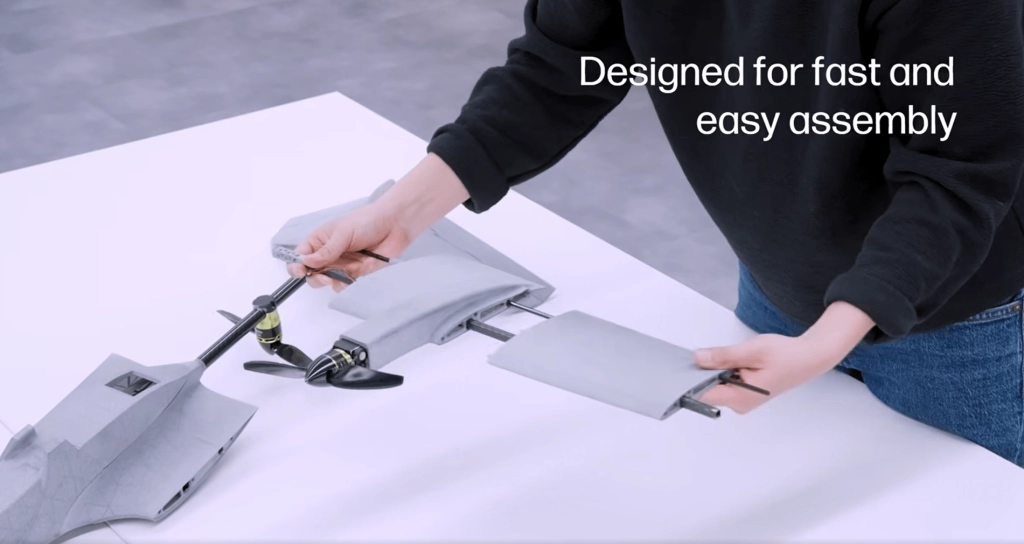
“Complex forms are hard to produce in carbon fiber,” said David Mazo, Aerospace Engineering Group Lead for HP Additive Manufacturing. “So we use standard rods that we just need to cut. We get the strength and cost advantage, and then we use our printer and material for everything that isn’t carrying the main structural load.”
This hybrid approach allows engineers to exploit carbon fiber where rigidity matters most, while relying on additive manufacturing for lightweight structures and complex geometries that would be difficult or expensive to produce otherwise.
“We take the best from each technology,” Mazo said. “One gives us strength and cost efficiency, and the other gives us freedom of shape and lightweight. That’s what we did with this drone, and it’s what we’re doing with customer projects.”
Showcasing Ultra-Thin Printing Capabilities
The drone also highlights one of HP’s most recent additive manufacturing advances: the ability to produce extremely thin, consistent parts at scale.
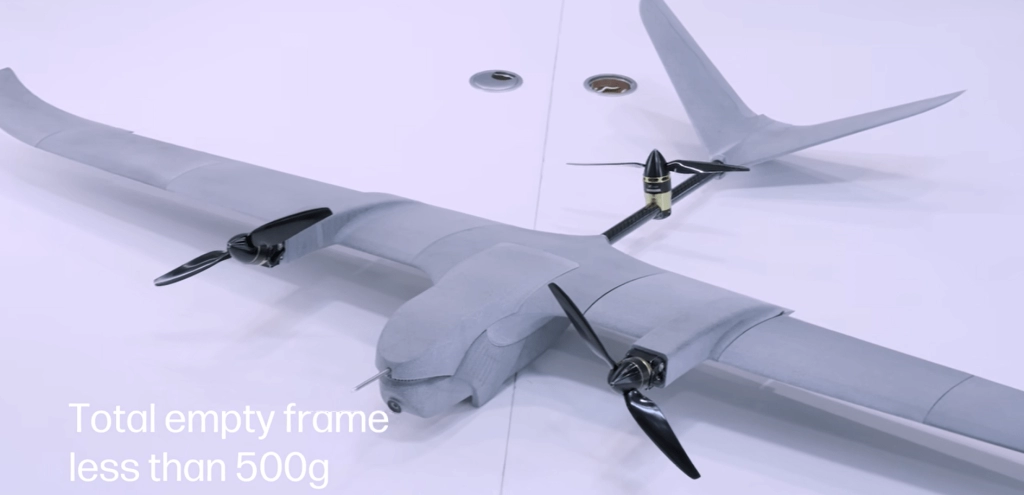
“HP’s 5600 platform allows users to fine-tune the printing process,” Quinquilla said. “When you’re adjusting thickness, you can produce parts of less than 0.5 millimeters. That’s a real differentiator.”
These thin structures are produced using polyamide materials already common in drone manufacturing, making the results directly relevant to real-world applications. The ability to reduce material thickness without sacrificing durability has clear benefits for weight reduction, aerodynamic efficiency, and overall performance.
Iteration at the Speed of Engineering Ideas
For the Barcelona team, one of the most energizing aspects of the project was the speed of iteration. Traditional manufacturing workflows often involve long delays between design, tooling, testing, and redesign. Additive manufacturing compresses those cycles dramatically.
“With molds, you have to develop them, test them, and then redesign them,” Mazo said. “Instead of loops that take weeks, you’re talking about months. That’s a huge barrier when you’re trying to move fast.”
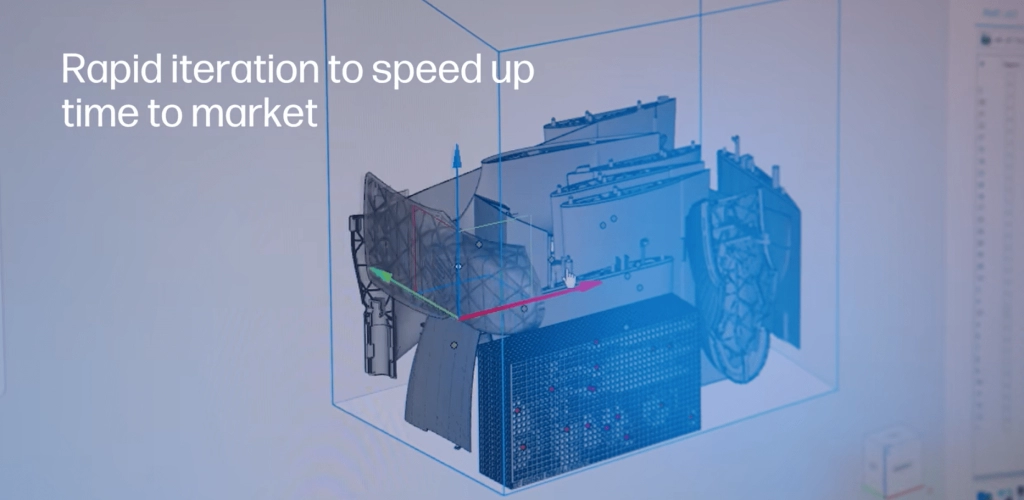
That speed mattered as the team pushed technical limits. Early flight tests revealed areas where rigidity could be improved, and engineers responded by redesigning and reprinting parts rather than starting over.
“As an engineer, a lot of times you wait six months to see how something works,” Mazo said. “Here, we were pushing the technology, learning fast, and making changes almost immediately. There were late nights, but also a lot of great moments.”
Quinquilla described the payoff: “Seeing how it works, the pieces snap together. It’s really smooth, really fast, really impressive.”
Scaling Without Lock-In
Beyond iteration, the project was designed to explore realistic production volumes. HP’s team sees additive manufacturing as especially well-suited to mid-range production, where tooling costs can otherwise stall innovation.
For small quadcopters, a single printer can support production of more than 7,000 units per month. For a 1.5-meter fixed-wing UAV, one printer can produce around 100 airframes per month. Larger systems can be produced at lower rates while still supporting hundreds of complete systems monthly.
“Below those volumes, you can’t even justify the molds,” Mazo noted. “Above them, you can start mixing printed parts with molding where it makes sense.”
Building Supply Chains That Bend, Not Break
Supply-chain resilience has become a defining concern for drone manufacturers, particularly as companies reconsider where and how their products are built to meet evolving purchase criteria. Additive manufacturing offers a way to localize production without duplicating entire factories.
“For companies outside the U.S., some are thinking about whether they should move molding manufacturing closer to their customers or leverage HP machines already in place,” Mazo said. “That approach gives you more resiliency and allows you to put manufacturing closer to where the drones are used.”
“It’s not just about how fast we can iterate,” Quinquilla added. “It’s also about how fast you can produce parts, because you can produce what you need, where you need it.”
That flexibility also supports embedded and field-level manufacturing, including the ability to repair or adapt drones closer to deployment.
A Toolset for Fast-Moving Drone Companies
HP is clear that it is not entering the drone market as a manufacturer. The goal is to help others move faster and with fewer constraints.
“We’re here to help people develop and produce drones,” Mazo said. “We’re not here to sell our drones. We’re showing that this is a really viable technology.”
HP specializes in transitioning additive manufacturing from niche applications to industrial-scale mass production. In collaboration with world-class industry leaders, the company works to transform and regionalize global supply chains. For drone manufacturers, this means leveraging proven industrial platforms to achieve repeatable, cost-effective production at scale.
In a sector where agility increasingly defines competitiveness, the work coming out of HP’s drone team points to a broader shift: manufacturing is becoming a strategic advantage, enabling drone makers to test ideas faster, respond to customers sooner, and keep innovation moving at the pace of engineering ambition.